
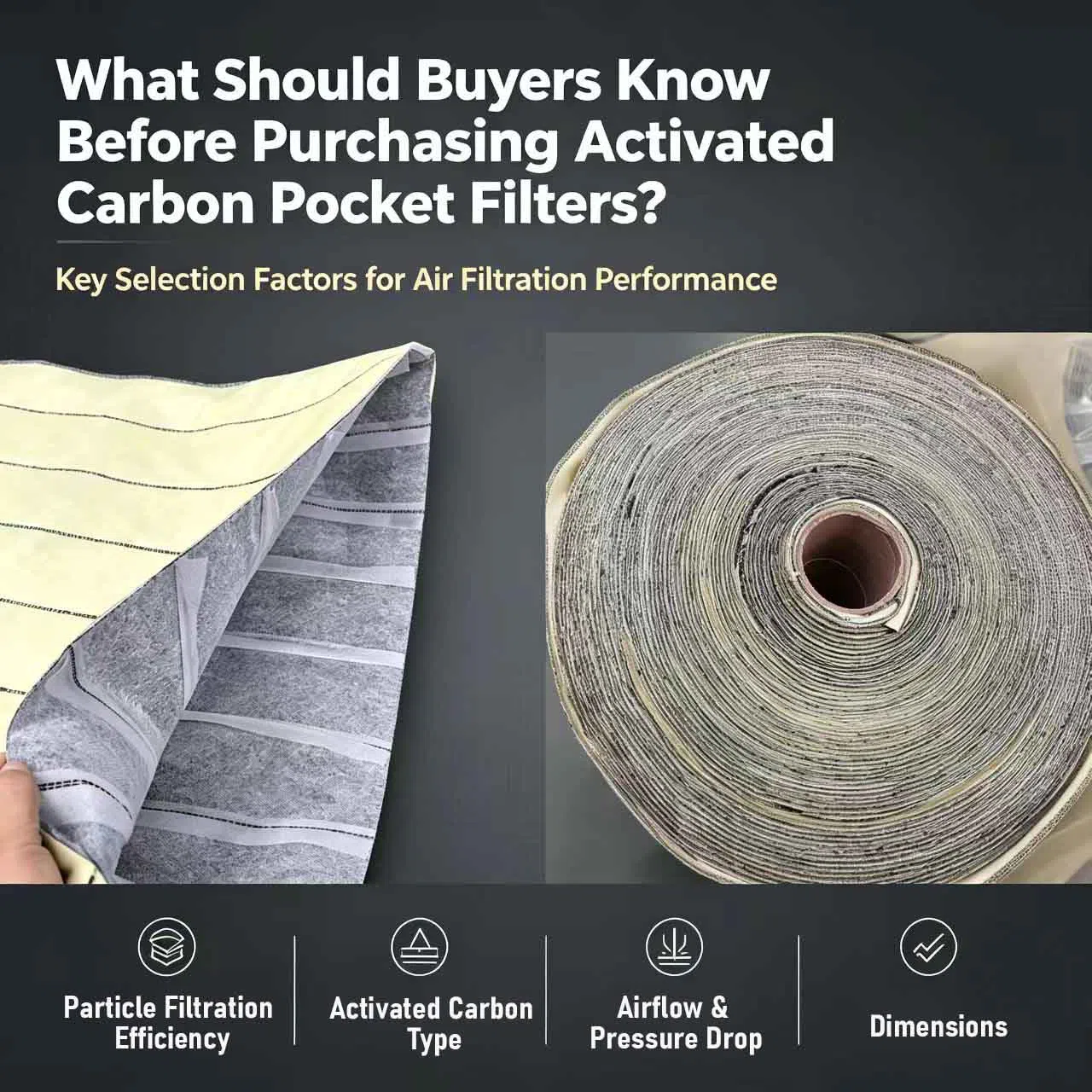
Selecting air filters for HVAC systems requires consideration of many factors. When an application requires bothairborne particle removal andodor control, buyers need to evaluate the filter's particle filtration efficiency, activated carbon performance, airflow resistance, and overall construction.
An activated carbon pocket filter can combine two filtration functions in one product: capturing airborne particles through its filter media and adsorbing selected gaseous contaminants through activated carbon. However, not all carbon bag filters offer the same capabilities. Some are designed mainly for odor adsorption, while others incorporate a defined particle filtration grade, such as F8.
Understanding this difference is essential when selecting a filter for commercial buildings, industrial ventilation, and other HVAC applications.
Understand How an Activated Carbon Pocket Filter Works
An Activated Carbon Pocket Filter is a bag-style air filter that uses activated carbon media to help control gaseous contaminants and unwanted odors. Depending on its media composition and construction, it can also provide a specified level of particulate filtration.
The multi-pocket structure increases the available filter area within a relatively compact installation space. Air passes through the filter media, where different filtration mechanisms work together.
Particle filtration and carbon adsorption are two separate processes:
Particle filtration: Synthetic fiber or other particle-filtering media captures suspended particles such as dust and airborne contaminants. Its performance is evaluated according to a particle filtration classification or test standard.
Activated carbon adsorption: Activated carbon has a porous structure with a large internal surface area. Selected gas and vapor molecules attach to the carbon surface through adsorption, helping reduce certain odors and gaseous pollutants.
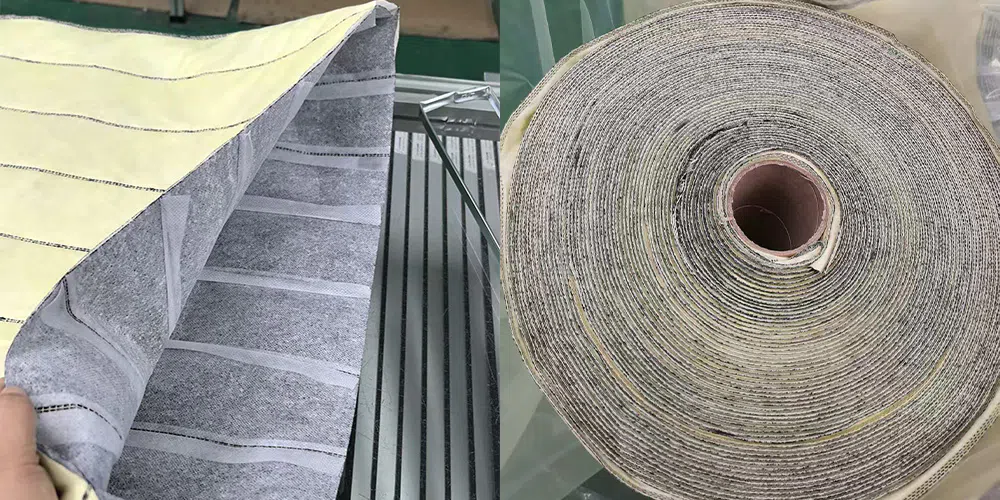
This distinction matters when comparing products. A common activated carbon bag filter may primarily focus on odor control, without providing a clearly specified particle filtration efficiency.
Six Key Factors to Consider Before Purchasing
Before placing an order, buyers should review the following factors to make sure the selected filter matches the actual operating conditions.
1. Particle Filtration Efficiency
Start by identifying the required particle filtration grade. If the HVAC system needs both particulate filtration and odor control, choose a product with a clearly specified efficiency rather than relying on the term "activated carbon filter" alone.
For example, an F8-rated product provides a defined particle filtration under the relevant test standard. Buyers should confirm the applicable standard and request supporting test information.
2. Activated Carbon Type and Quantity
The quality and quantity of activated carbon directly influence the filter's adsorption capacity. Buyers should ask about the carbon type, media composition, carbon loading, and suitability for the target contaminants.
Different gases and vapors behave differently during adsorption. Standard activated carbon is not equally effective against every gaseous pollutant. If the application involves specific VOCs, chemical fumes, or industrial emissions, confirm media compatibility before purchasing.
3. Airflow Rate and Initial Pressure Drop
A filter must match the airflow requirements of the HVAC system. An unsuitable filter may create excessive resistance, affecting fan performance and the overall ventilation system.
Ask the manufacturer for the rated airflow and initial pressure drop under specified test conditions. These values should be considered together. A filter with a suitable efficiency grade is not necessarily the right choice if its resistance is incompatible with the equipment.
4. Filter Dimensions and Pocket Configuration
Check the installation dimensions, frame material, pocket quantity, and pocket depth. These structural details affect equipment compatibility and the available filtration area.
A properly fitted filter helps reduce the risk of air bypass around the frame. For replacement projects, provide the existing filter dimensions or drawings. For new systems, confirm the required specifications with the HVAC designer or equipment manufacturer.
5. Application and Target Contaminants
Different environments have different air quality requirements. Commercial buildings may need general odor management, while industrial facilities may face more specific gaseous contaminants alongside airborne dust.
Before choosing an Activated Carbon Air Filter, identify the main pollutants, their approximate concentrations, operating temperature, relative humidity, and airflow conditions. These factors influence adsorption performance and service life.
6. Supplier Manufacturing and Quality Control
A reliable supplier should be able to explain the filter structure, media specifications, efficiency classification, and available customization options.
For bulk purchasing, also evaluate production consistency, inspection procedures, sample availability, communication efficiency, and delivery arrangements. Clear technical documentation makes it easier to compare quotations and reduce specification misunderstandings.
How to Choose the Right Supplier for Your Project
Selecting the right product is only part of the purchasing process. The supplier's manufacturing capability and technical support also influence whether the filter can meet long-term project requirements.
When evaluating manufacturers, consider these points:
Evaluation Item | What Buyers Should Confirm |
Product specifications | Efficiency grade, media type, dimensions, and pressure drop |
Customization | Frame materials, pocket configuration, and non-standard sizes |
Quality control | Incoming material inspection and finished product checks |
Production capability | Sample development and bulk order capacity |
Technical support | Assistance with product selection and specification confirmation |
For projects requiring both particle filtration and odor management, avoid comparing products solely by their activated carbon content or appearance. A suitable filter should provide the required particle filtration performance while offering adsorption characteristics appropriate for the target contaminants.
SNYLI provides air filtration products and customized solutions for commercial and industrial applications. Its product range covers air filters, filter media, FFU units, and related air purification equipment. For buyers sourcing an activated carbon bag filter, confirming the required efficiency, filter dimensions, frame options, and application conditions is an important step before production.
SNYLI can work with customers to discuss product specifications and project requirements, helping them identify a suitable configuration for their HVAC systems. Whether you need standard sizes or customized filter dimensions, clear technical communication can make the purchasing process more efficient.
Looking for an activated carbon bag filter that combines particle filtration with odor control?
Contact SNYLI to discuss your specifications and request a solution for your project!


