
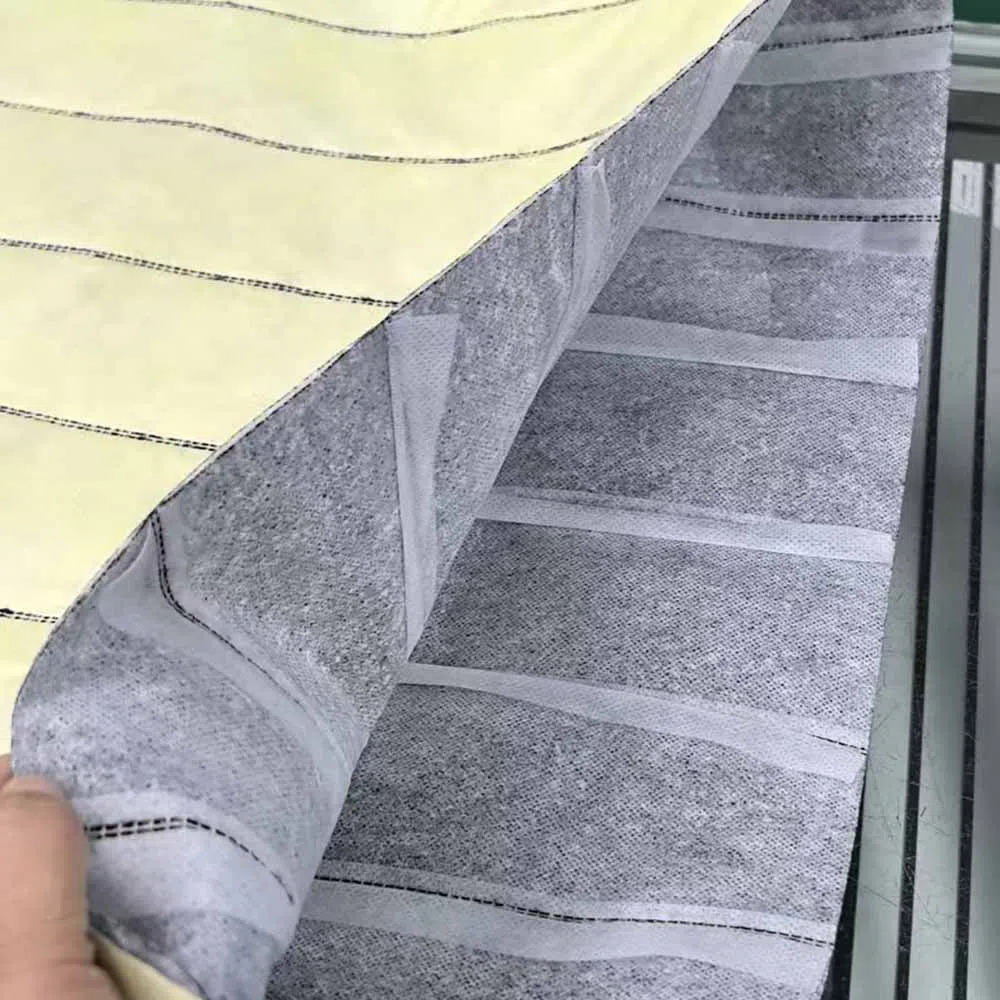
Product Description
The Activated Carbon Impregnated Bag Filter Media represents a specialized category of filtration material designed explicitly for gaseous contaminant capture in modern heating, ventilation, and air conditioning (HVAC) systems. Unlike conventional mechanical filters that only remove particulate matter, this advanced filtration fabric incorporates finely ground activated carbon particles permanently bonded onto a durable nonwoven substrate.
The impregnation process ensures that the activated carbon remains evenly distributed across the entire media surface, maximizing the contact area between the airflow and the adsorptive material. This engineered configuration allows the Activated Carbon Impregnated Bag Filter Media to effectively target molecular-level pollutants, including volatile organic compounds, ozone, formaldehyde, and unpleasant odors that typically bypass standard particulate filters.
The media is manufactured in continuous rolls or cut-to-size sheets, enabling flexibility for various bag filter fabrication requirements. Its lightweight construction minimizes pressure drop while maintaining high adsorption efficiency, making it an economically viable solution for both retrofit and new installation projects. The combination of mechanical strength and chemical adsorption capability sets this filtration fabric apart from ordinary carbon-coated materials, ensuring long-term operational stability even under variable airflow conditions commonly encountered in commercial and industrial environments.
| Efficiency Grade | F5 | F6 | F7 | F8 | F9 |
| Filtration Efficiency | 45% | 65% | 85% | 95% | 98% |
| Pressure Drop | 10±2Pa | 12±2Pa | 18±2Pa | 20±2Pa | 25±2Pa |
| Basis Weight | 260±5g/㎡ | 270±5g/㎡ | 276±5g/㎡ | 285±5g/㎡ | 292±5g/㎡ |
| Thickness | 2.15mm | 2.15mm | 2.2mm | 2.22mm | 2.3mm |
| Number of Layers | 3 | 3 | 4 | 4 | 4 |
| Test Conditions | 32 L/min, 0.3 µm particle size. | ||||
Key Features
The Activated Carbon Impregnated Bag Filter Media offers several distinct advantages that directly address the operational challenges faced by HVAC system owners and maintenance personnel. This high-performance filtration fabric combines physical durability with exceptional chemical adsorptive properties, ensuring reliable contaminant removal throughout its service life. Below are the primary characteristics that define this product:
Superior Adsorption Efficiency: The uniformly impregnated carbon particles provide a high surface area for gas-phase contaminant capture, achieving removal rates exceeding 90% for many common VOCs and odorous compounds at optimal operating conditions.
Low Initial Resistance: Despite the added carbon content, the open structure of the nonwoven substrate maintains relatively low pressure drop characteristics, reducing fan energy consumption and overall system operating costs.
High Dust-Holding Capacity: The three-dimensional fiber matrix allows the Activated Carbon Impregnated Bag Filter Media to trap particulate matter while simultaneously adsorbing gases, extending the service interval between replacements.
Moisture and Temperature Stability: The synthetic fiber base exhibits excellent resistance to humidity fluctuations and moderate temperature variations, preventing media degradation or carbon leaching in challenging environments.
Customizable Formats: Available in multiple carbon loadings, substrate weights, and dimensional configurations, this activated carbon filtration fabric can be tailored to meet specific airflow requirements and space constraints in diverse HVAC applications.
Cost-Effective Operation: The extended service life and reduced replacement frequency compared to standalone carbon-packed systems result in lower total cost of ownership, making this impregnated media an economically attractive alternative for long-term odor and gas control strategies.
Application Scenarios
The Activated Carbon Impregnated Bag Filter Media finds widespread deployment across numerous indoor air quality management sectors where gaseous contaminants pose significant health or comfort concerns. This versatile filtration solution serves critical roles in environments ranging from commercial office spaces to heavy industrial facilities. The following application areas highlight the product's adaptability and performance capabilities:
Commercial Building Ventilation: Office complexes, retail centers, and educational institutions utilize this impregnated filter fabric to remove tobacco smoke residues, cooking odors, and off-gassing from furniture and building materials, ensuring occupant comfort and productivity.
Healthcare Facilities: Hospitals, clinics, and pharmaceutical cleanrooms depend on the Activated Carbon Impregnated Bag Filter Media to eliminate sterilizing agent residues, chemical fumes, and microbial volatile organic compounds that could compromise patient recovery or product integrity.
Industrial Process Air Treatment: Manufacturing plants, chemical processing units, and printing facilities employ this filtration material to capture solvent vapors, plasticizer emissions, and industrial exhaust gases before they reach worker breathing zones or atmospheric discharge points.
Wastewater and Sewage Treatment: Pumping stations and treatment plants use this activated carbon filtration fabric to neutralize hydrogen sulfide and mercaptan odors that cause neighborhood nuisance complaints, improving community relations and regulatory compliance.
Food Processing Facilities: Bakeries, meat processing plants, and snack food production lines install this odor-adsorbing media to prevent cross-contamination of product flavors and maintain hygienic air conditions required by food safety regulations.
Data Centers and Telecommunications: Sensitive electronic equipment rooms benefit from the installation of this gas-phase filtration material to remove corrosive airborne contaminants that cause printed circuit board failure and reduce equipment reliability over time.
In summary, the Activated Carbon Impregnated Bag Filter Media delivers comprehensive gas-phase contaminant management across diverse HVAC system applications, combining adsorptive efficiency with operational practicality to meet modern indoor air quality challenges effectively.


